

How World Tour teams, AI, and concentrated investment are reshaping the landscape of high-performance cycling




Last year I launched a development program with the broad goal of providing young riders with more than just training programs, but also structured access to coaching, support (physiotherapy, nutritionists, sports psychologists, physiologists, etc.) and knowledge networks that are increasingly key to high performance.
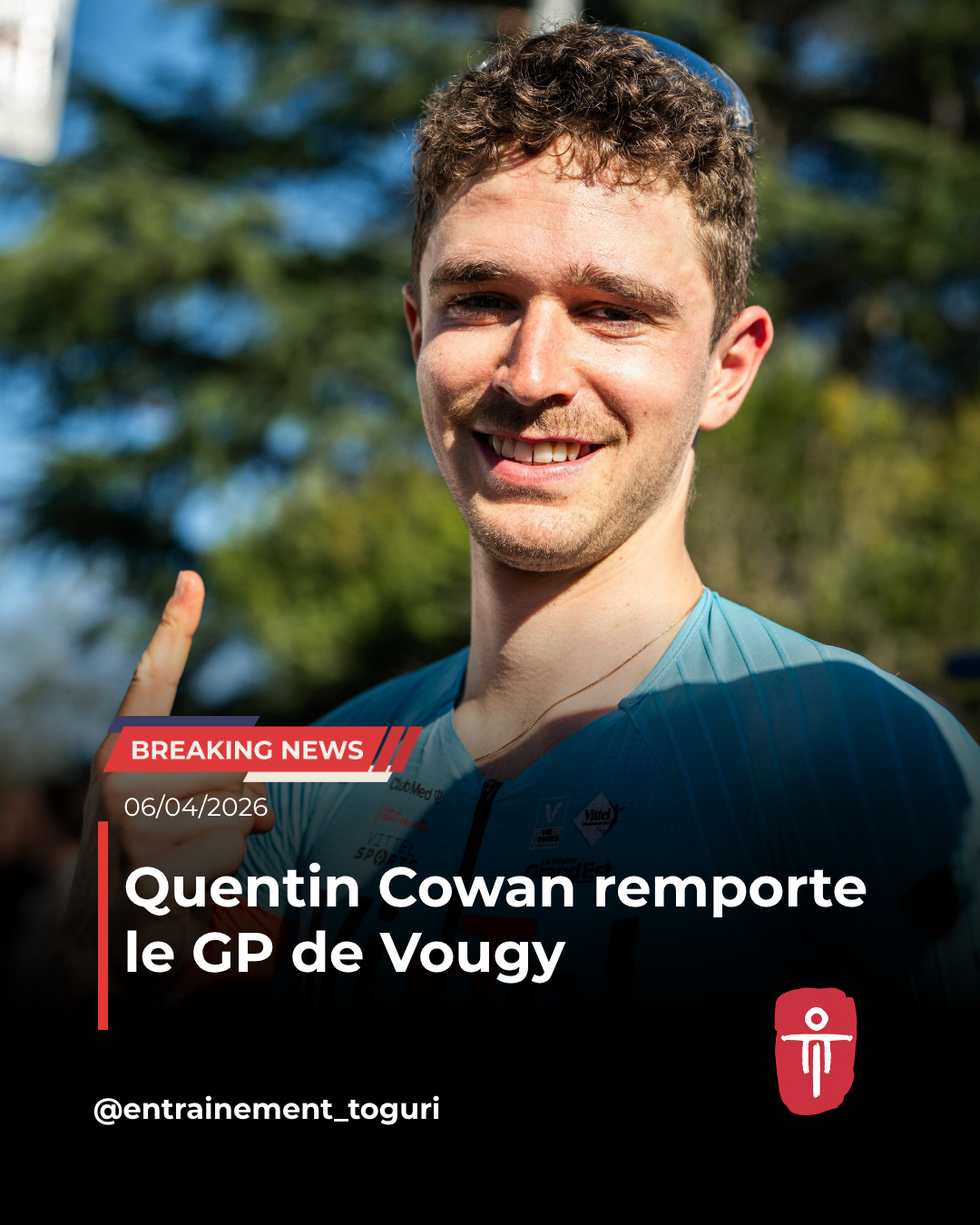
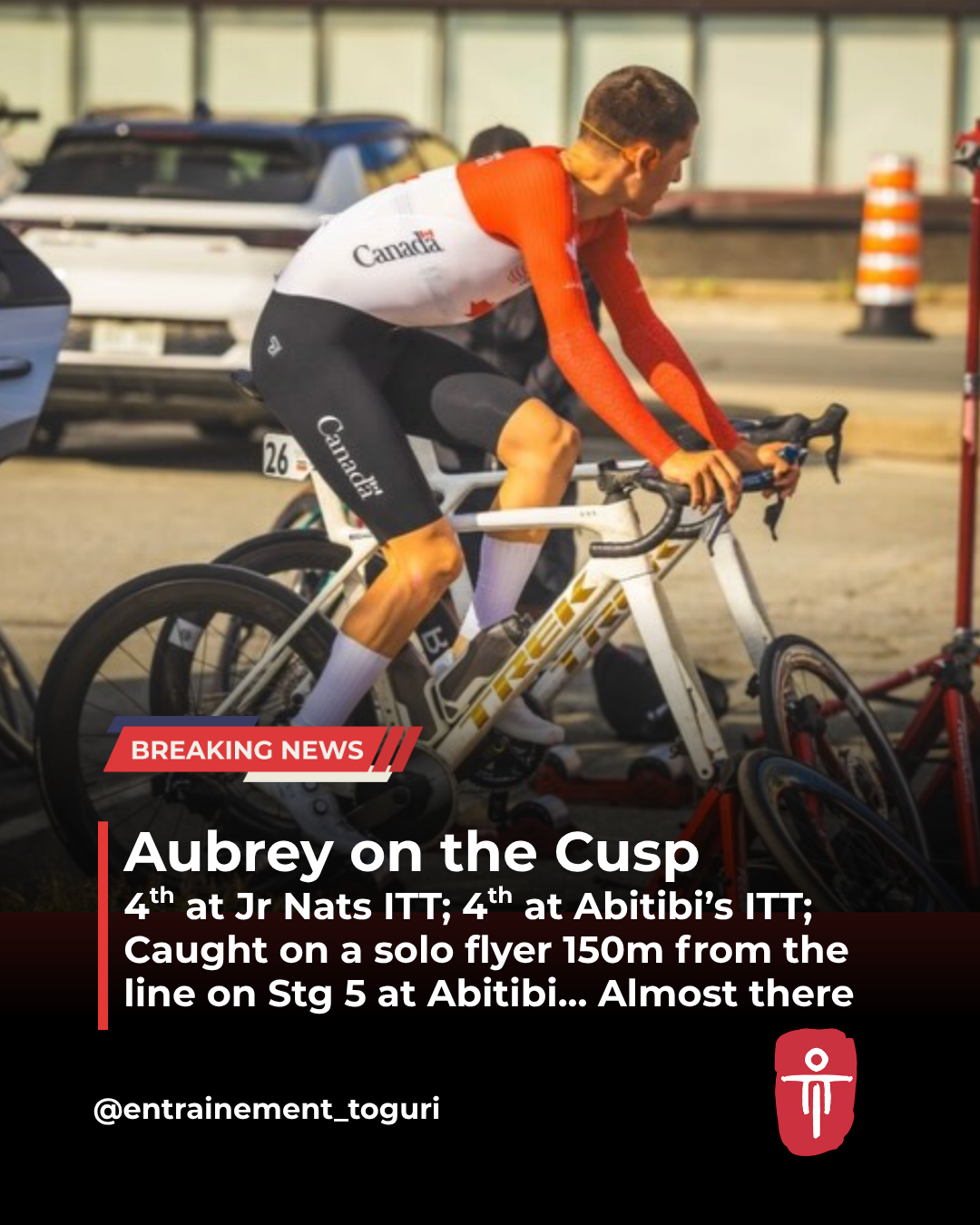
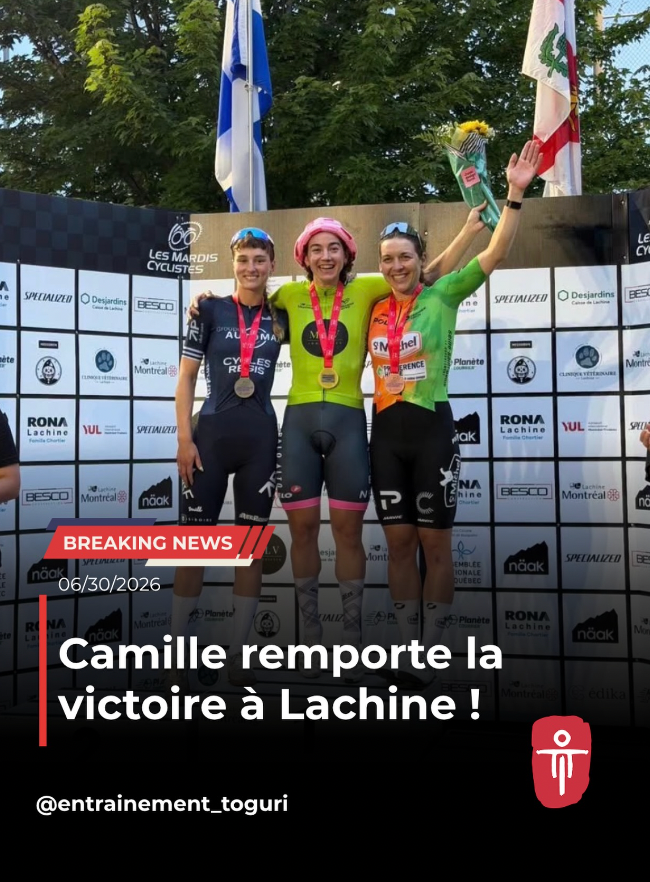
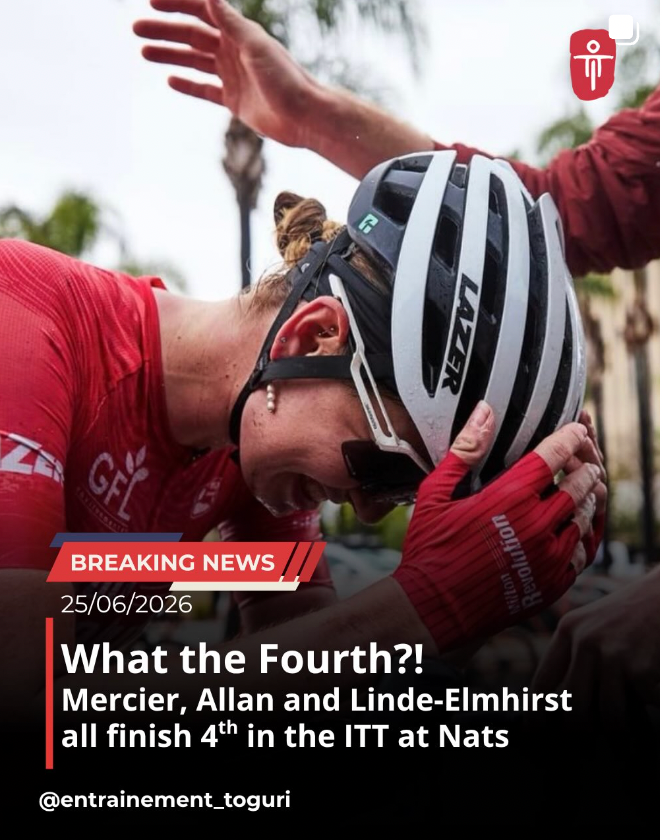
The results have been encouraging: Jedda (U15) is currently leading the Coupe de Quebec series, has won ITTs, RRs and Crits. Jon (U17) has won both a National Cyclocross and National Road title. Albert (U19) is the Junior National Road Champion. Aubrey (U19) was 4th in the ITT at Nats and represented Canada at the Tour de l'Abitibi. Simon (U19) won his first UCI race at Abitibi. Nadiya (U23) garnered contract-worthy results at Redlands, Gila and Nationals, where she won silver in the Crit behind Laury – who took the gold. Quentin (Elite) won at GP Vougy, was on the podium at Vosges and Bédat and has 3 top 10s at UCI races... and so on. These are quality performances across every category from U15-Elite.
So, what are we doing in our "development program"? Looking back, my desire to situate my coaching in relation to a structured development program was responding to a fundamental shift in how development is taking place in cycling. The model of long-term athlete development (LTAD) that once governed the approach of many national federations is giving way to the production of "phenoms" emerging from World Tour teams whose corporate structures now dictate the pathways young riders must follow. This shift from long-term models governed by national entities to phenoms built through corporate investment is not strictly a shift occurring in cycling. The cycling world's changing approach to "development" echoes some of the polarization and transfers of power that we are experiencing more broadly in our current socio-political moment.
LTAD recognized that adolescents are not simply miniature adults. Their skeletons, endocrine systems, brains and social environments develop on different timelines. High performance therefore meant respecting development rather than accelerating it, to avoid burnout and performance plateaus. In cycling, LTAD prepares athletes for high performance in their early 20s. In practice, LTAD imagines riders competing for professional contracts during their U23 years, and most Canadian male racers have turned pro in their mid-20s.
The difficulty is that this model increasingly feels like a story from another era. World Tour development teams are systematically identifying 15-17-year-olds, signing them to development contracts, and developing riders like Isaac Del Toro (Giro contender at 20; Tour podium at 21), Juan Ayuso (grand tour podium at 20), Remco Evenepoel (Junior Worlds winner at 18, elite Worlds winner at 22), Cian Uijtdebroeks, Lenny Martinez, Josh Tarling, Paul Seixas and others who arrive at 19 already winning at the WT level.
The concentration of development pathways within WorldTour organizations marks a structural shift in elite cycling. This recent shift has produced legitimate pressure on coaches, riders, parents, and national federations to accelerate development timelines and reassess the LTAD model.
The emergence of young phenoms has been enabled by extraordinary advances in nutrition, training science, and performance technology. Better fueling strategies, power-based training, affordable lactate testing, HRV monitoring, heat training, aerodynamic clothing and equipment, and increasingly sophisticated analytics have all expanded what young riders can tolerate and achieve. Finally, social media has democratized access to professional performance data. Junior riders now see the power files, training sessions, and race performances of the world's best athletes almost in real time.
The issue is not that these advances are problematic in themselves, but that they have become embedded within WT teams, that have themselves become powerful organizational structures capable of accelerating development.
WT teams now have data analysts and staff watching Junior races globally, algorithms flagging riders whose power profiles predict success, and structured pipelines that identify riders 3-5 years before they would traditionally be signed. The training data of both Canada's Cadet and Junior Road Champions is already being analysed by teams, and their race results are easily available online.
It is not that the LTAD model is wrong, but it seems to belong to a slower world in which professional careers were more stable; where intuition and perceived exertion were less immersed in data; where publicly funded federations remained the principal institutions guiding athlete development and were therefore accountable to the public for their welfare. These days, it's not simply that strategies in nutrition, sports science and equipment have developed rapidly and changed cycling. Development teams attend camps with their WT counterparts, accessing their nutritionists, physiologists, coaches and other key staff. Therefore, the political economy of the sport has changed who controls and applies these developments: super teams such as UAE Team Emirates-XRG, Team Visma | Lease a Bike, Red Bull-BORA-hansgrohe, Decathlon AG2R La Mondiale, Netcompany | Ineos. They are not investing narrowly in riders that are winning in their twenties. They are producing comprehensive ecosystems which situate riders on their pathways of development.
As I stated in a previous blog, "The emergence of development teams ... explicitly or closely affiliated with World Tour teams has created a concentration of capital, knowledge and professional networks." This concentration, alongside increasingly professional scouting networks and the use of AI in training, rider profile assessment and race plans, is the key force disrupting LTAD models. Fewer high performance riders are gradually emerging over time. Instead, phenoms are emerging from this vortex of wealth, technology and data.
The ideal of the well-crafted athlete, patiently developed over years, is giving way to the capital-intensive, data-driven phenom. The former embodies a humanistic ideal: a well-rounded individual whose athletic excellence reflects a broader flourishing within civic society. The latter is an outlier by definition—a product of concentrated capital, AI-enabled knowledge networks, vast data infrastructures, and corporate power.
The danger is not simply that teenagers train too hard. It is that they begin living like professionals before they have become adults. Developmental time is compressed. The future begins to govern the present. Young riders are asked to anticipate professional expectations before their bodies, identities, and lives have had time to mature. High performance becomes organized around immediacy: immediate adaptation, immediate data, immediate results – but also a ambiguous future of care to be defined by the team's rapidly evolving ecosystem of high performance. The stress of development in cycling is therefore no longer one of historical progress, but an anxious grappling with a state of emergence, an odd commitment to become an outlier sustained within an ecosystem that is defined by corporate vs public culture.
The challenge is to create a development program that aims for balance and equilibrium in the heart of the vortex to avoid the scenario of young cyclists being blasted and burnt out from the sport they love. Bicycles should remain a way for young people to explore the world they inhabit — not merely vehicles carrying the stress of a future that arrives too soon. Is the compression of time annihilating the space of cycling in lives of young people?
Our own program is still young, and its successes have so far come primarily at the national level. But the challenge seems increasingly clear: to prepare athletes for a world of accelerated high performance without accelerating burnout; to embrace science and technology without allowing them to define childhood development; to find equilibrium within the vortex rather than simply being pulled into it.